
Figment App
Making irreversible transactions feel trustworthy.
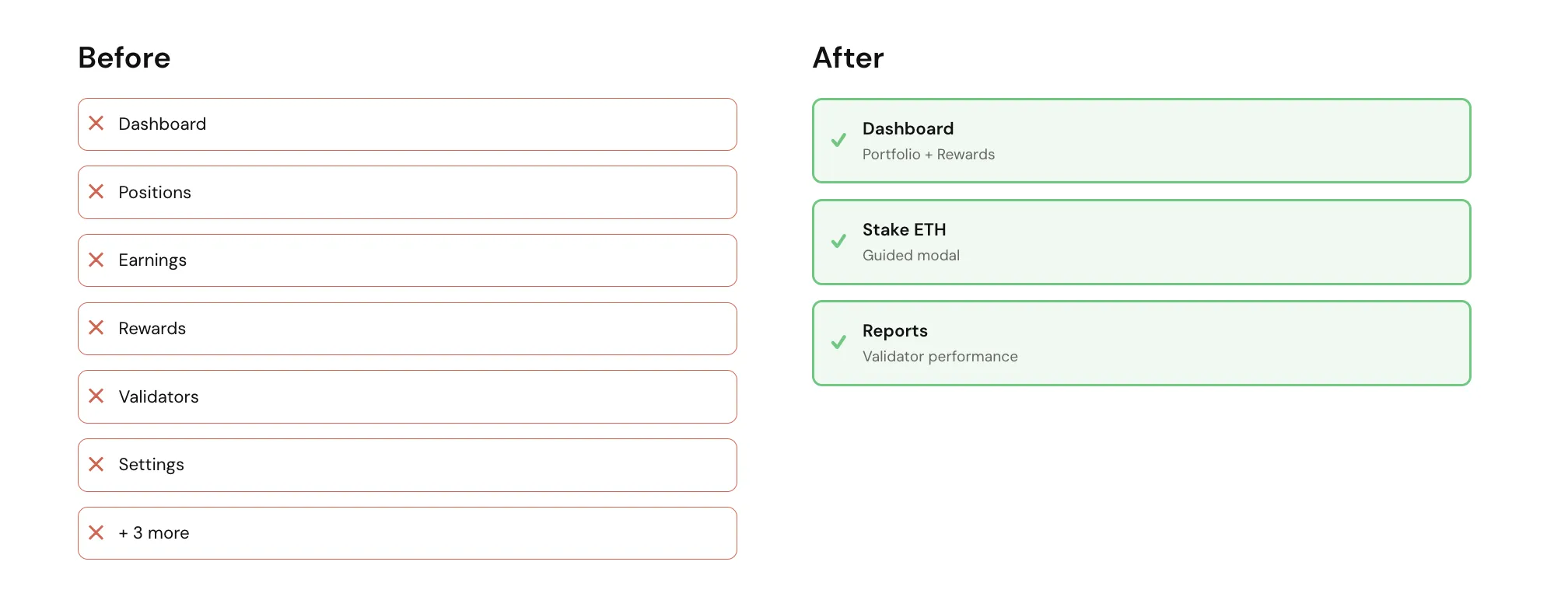
How I redesigned a developer-built tool into the interface institutional clients use to stake ETH — improving flow completion to ~83% and consolidating 9+ pages into 3 surfaces.
Impact
83%
Staking flow completion rate (up from ~52%)
~40%
Reduction in post-staking support inquiries
Background
Redesigning a high-stakes staking experience for confidence and trust
Figment is one of the world's largest blockchain infrastructure companies. They provide staking infrastructure for institutions — hedge funds, exchanges, family offices, and crypto-native operators — across 40+ protocols including Ethereum, Solana, and Cosmos. As of 2024, Figment secures roughly 5% of all staked Ethereum on the network.
The Product:
Figment Prime is the web platform institutional clients use to stake, monitor, and manage their digital assets. A single Ethereum stake is 32 ETH — at least $80K at the time of this work — locked for months, pointing to an address that cannot be changed after submission. This is the product I redesigned.
My Role:
Principal Product Designer. End-to-end ownership — problem framing with PM and leadership, user research, IA restructure, staking flow, design system, responsive layer, and post-launch iteration.
The Challenge
How do you make an irreversible transaction feel safe?
Staking ETH means locking $80K+ for 6+ months, delegating to a validator you've never met, and accepting that a single wrong address is permanent and irrecoverable. The marketing pitch was "one-click staking." The product reality was nine separate pages, no visible progress, and a withdrawal address field that users hit and froze on.
What I Inherited
A tool that looked like a tool.
A user arriving at the Home page to stake ETH had no idea where to go. Protocol cards, a network news feed, a calendar, validator tables — and no path to initiate a stake. The staking entry point was buried in a separate nav section with no orientation context.

Research & Diagnosis
Two failure modes. One reframe.
Reversible and irreversible decisions were scattered throughout the flow with no signal about which ones required real care.

Failure at Entry
The withdrawal address step was where users hesitated most — pausing, re-reading the warning, or closing the modal entirely.

Failure at Exit
This reframe became the north star for every design decision that followed.
The Approach
Three bets, one architectural foundation.
Before touching any individual flow, I had to fix the foundation. Nine pages with no organizing logic — the IA was the first design decision, and the most consequential, because everything else depended on getting it right.
The Rebrand
New architecture required a new visual language.
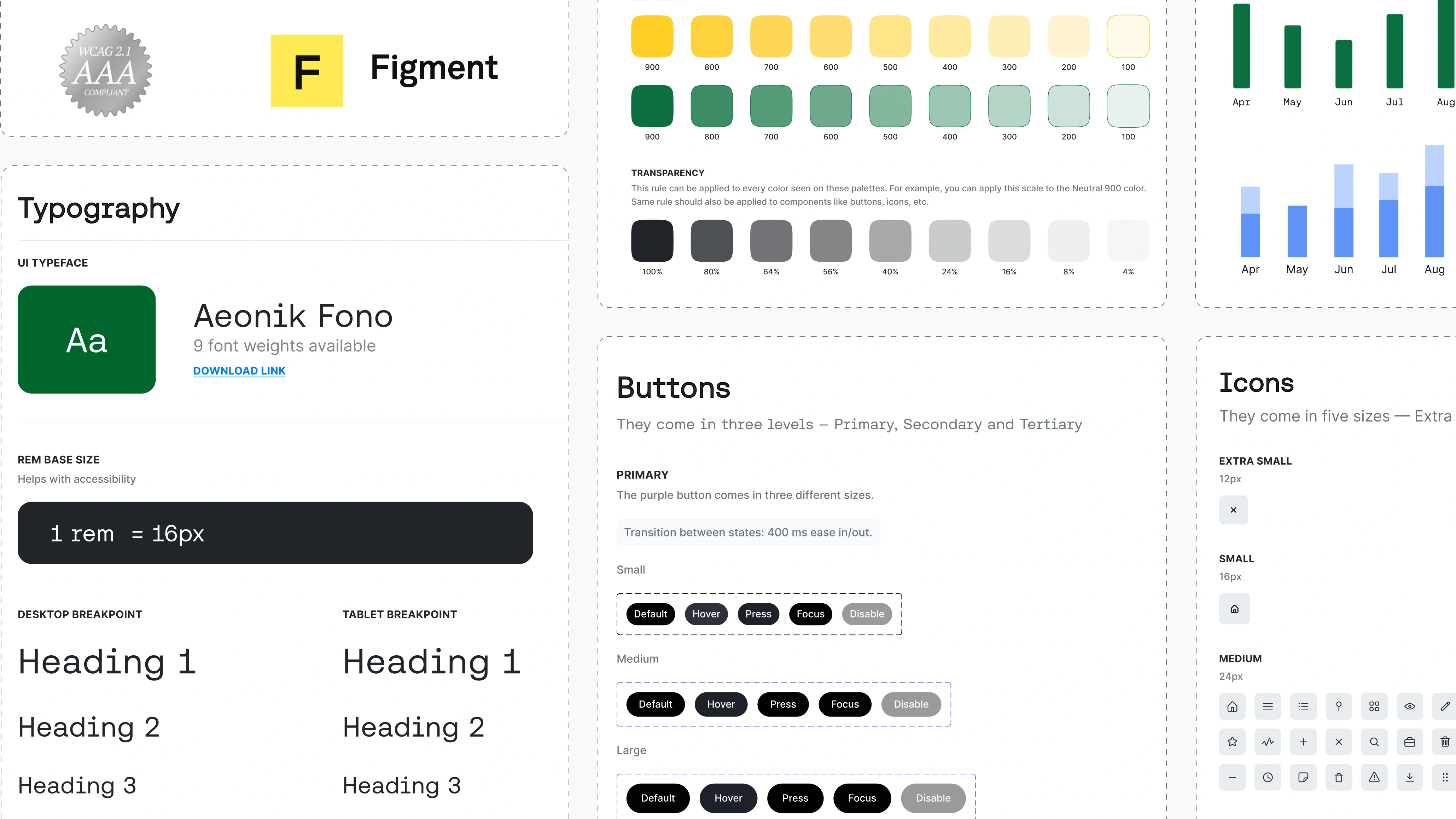
Figment Prime's black-and-yellow developer aesthetic didn't match the product we were building. I designed a complete visual system — color, typography, iconography, illustration, and component library — to support the new IA and establish trust at every surface.
Decision 1
The 6-Step Staking Flow
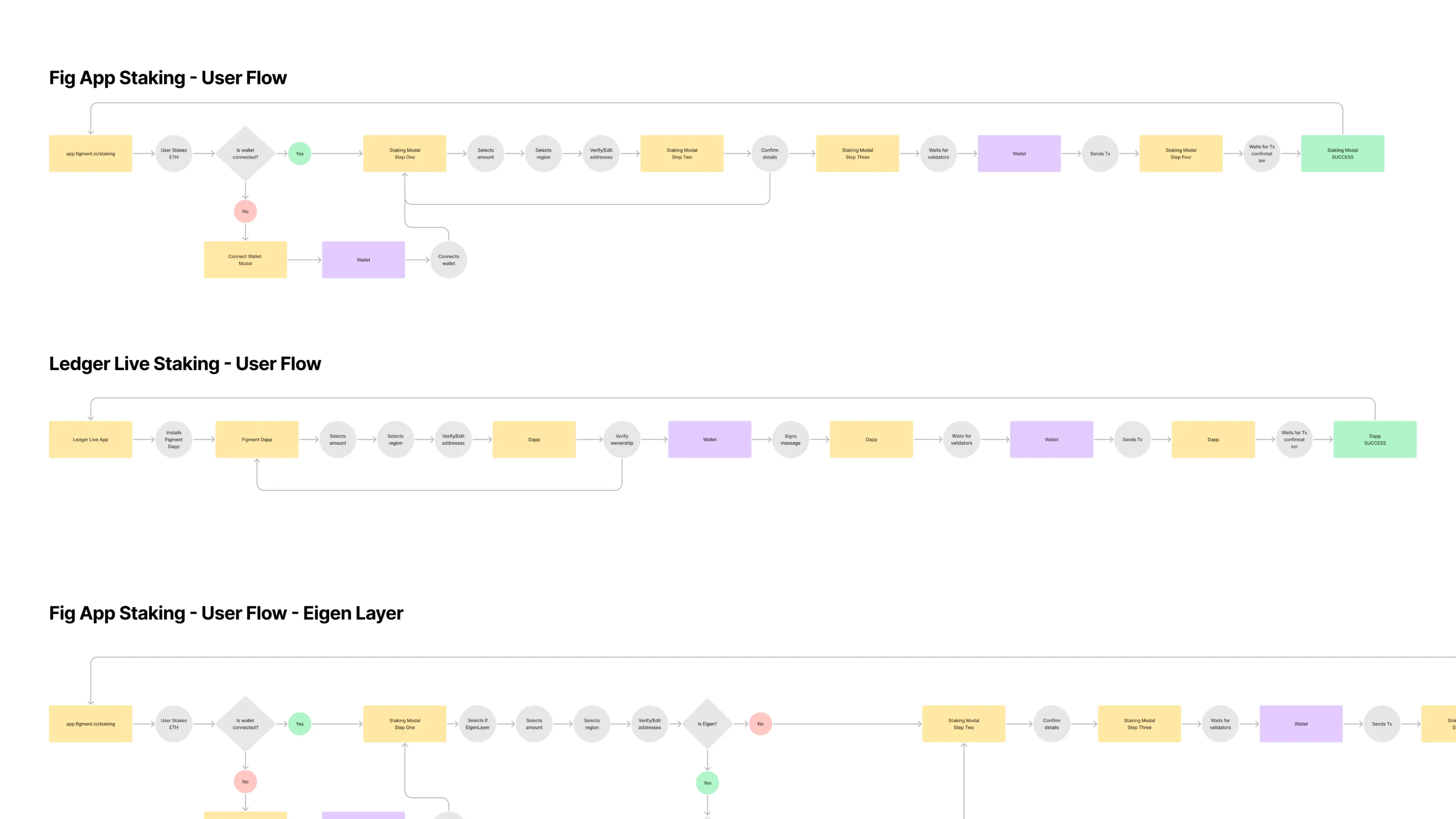
Every competitor shipped one-step staking. We shipped six steps with a persistent context panel. Why? Because at $80K per transaction, clarity beats speed.
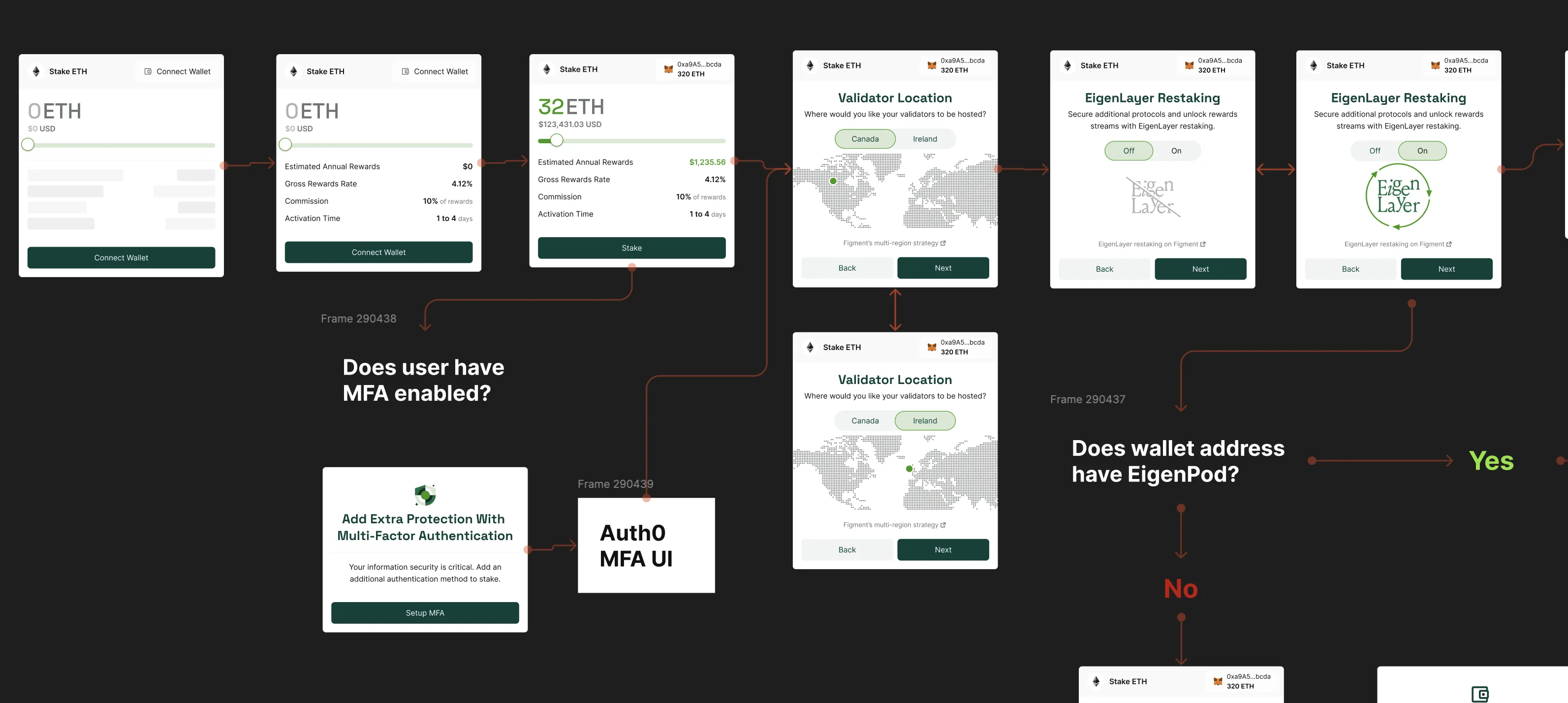
Early Exploration
Final Execution: Users didn't need screen space — they needed persistent context. We collapsed the flow into a contained modal with a persistent summary panel on every step.
Decision 2
The Withdrawal Address Checkpoint
This is where users froze. We reframed it from a dense form field into a high-stakes confirmation moment — dedicated step, explicit language, consequences visible.
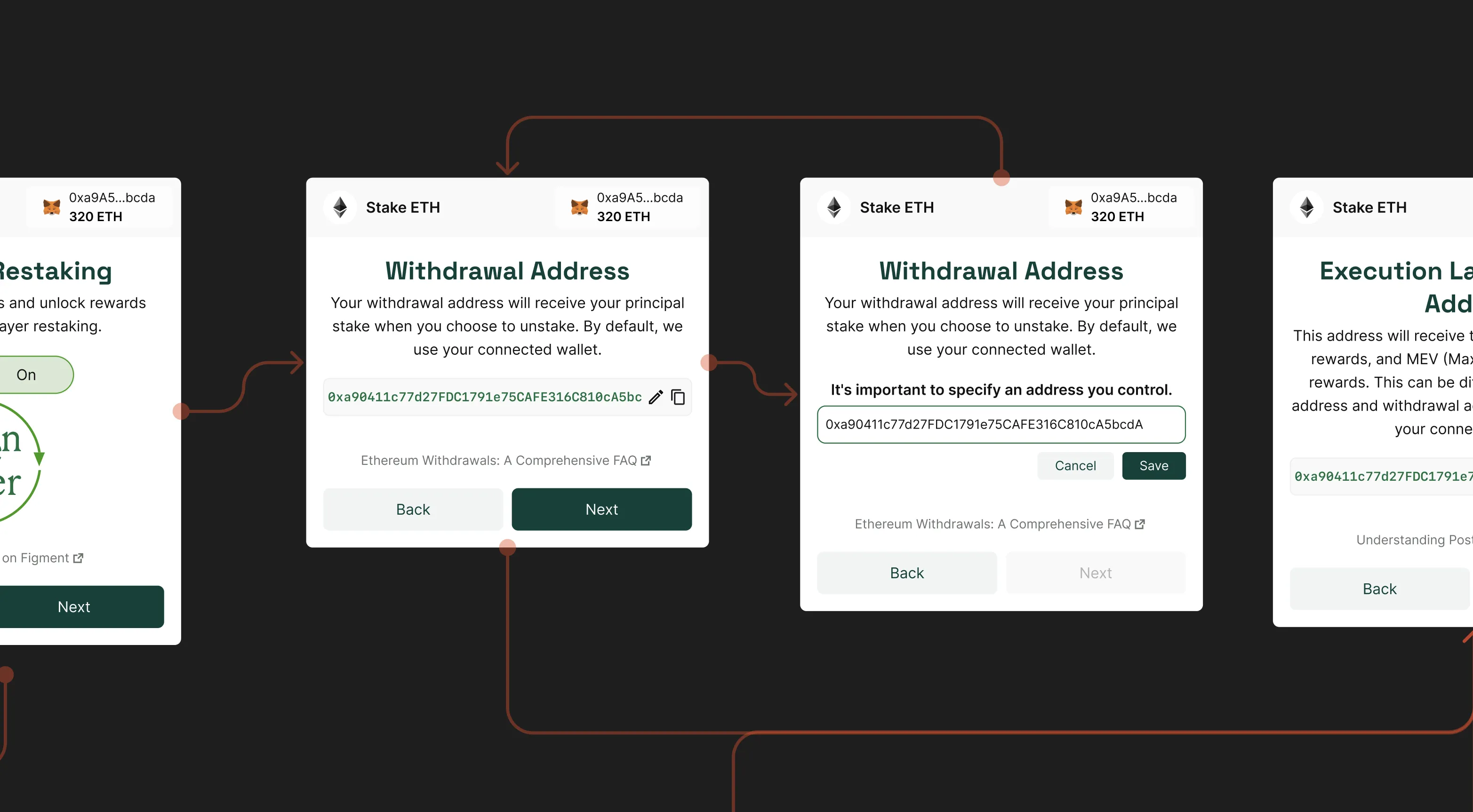
Early Exploration
Final Execution: Dedicated step. Connected wallet pre-fills the address. Explicit language: "This will receive your principal stake when you choose to unstake." Confidence at this step rose from 2.8/5 to 4.2/5.
Decision 3
Dashboard Consolidation
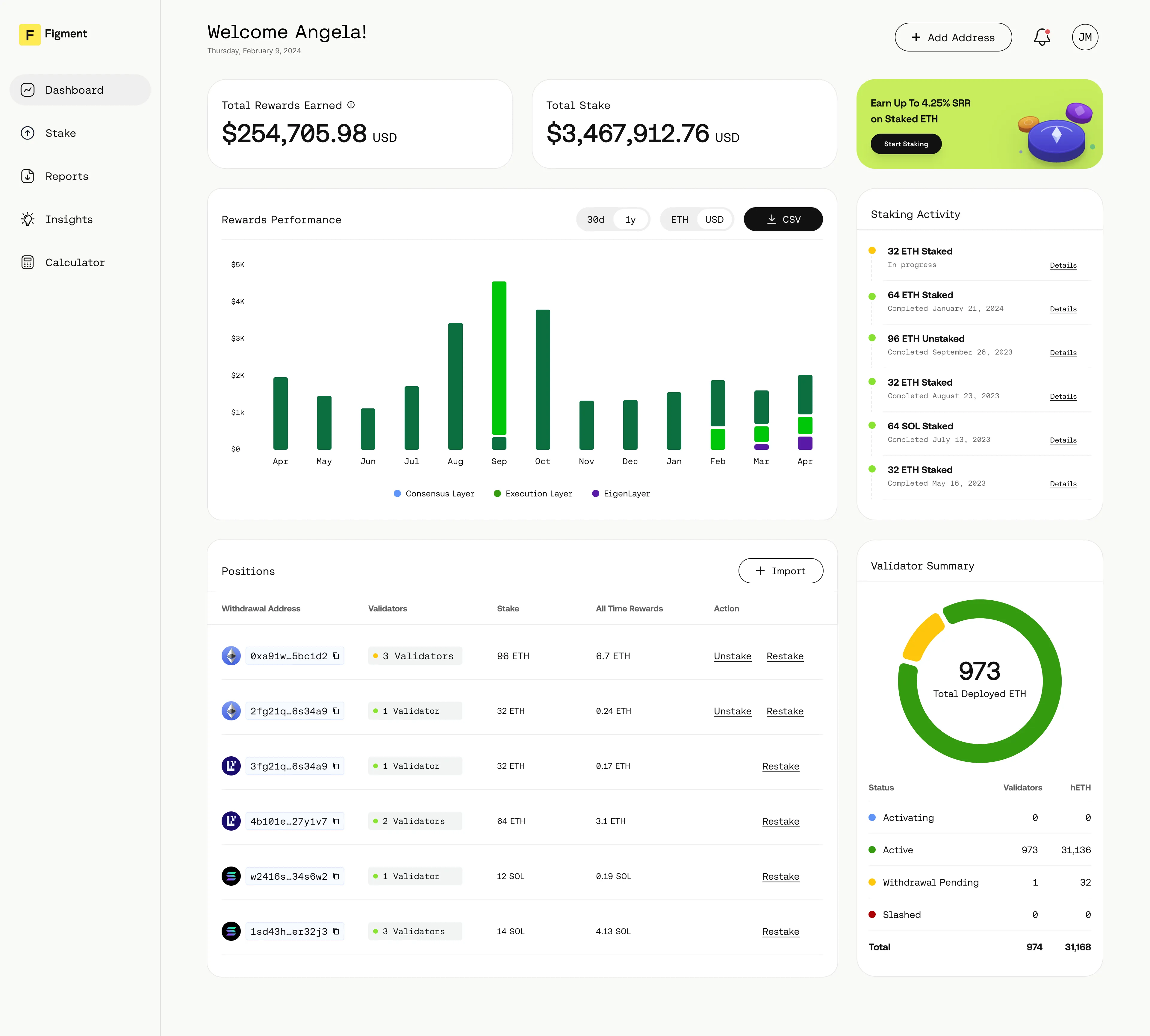
Users were jumping between five separate pages to answer one question: "How is my validator doing?" We merged Portfolio, Rewards, and Validator Performance into one surface.
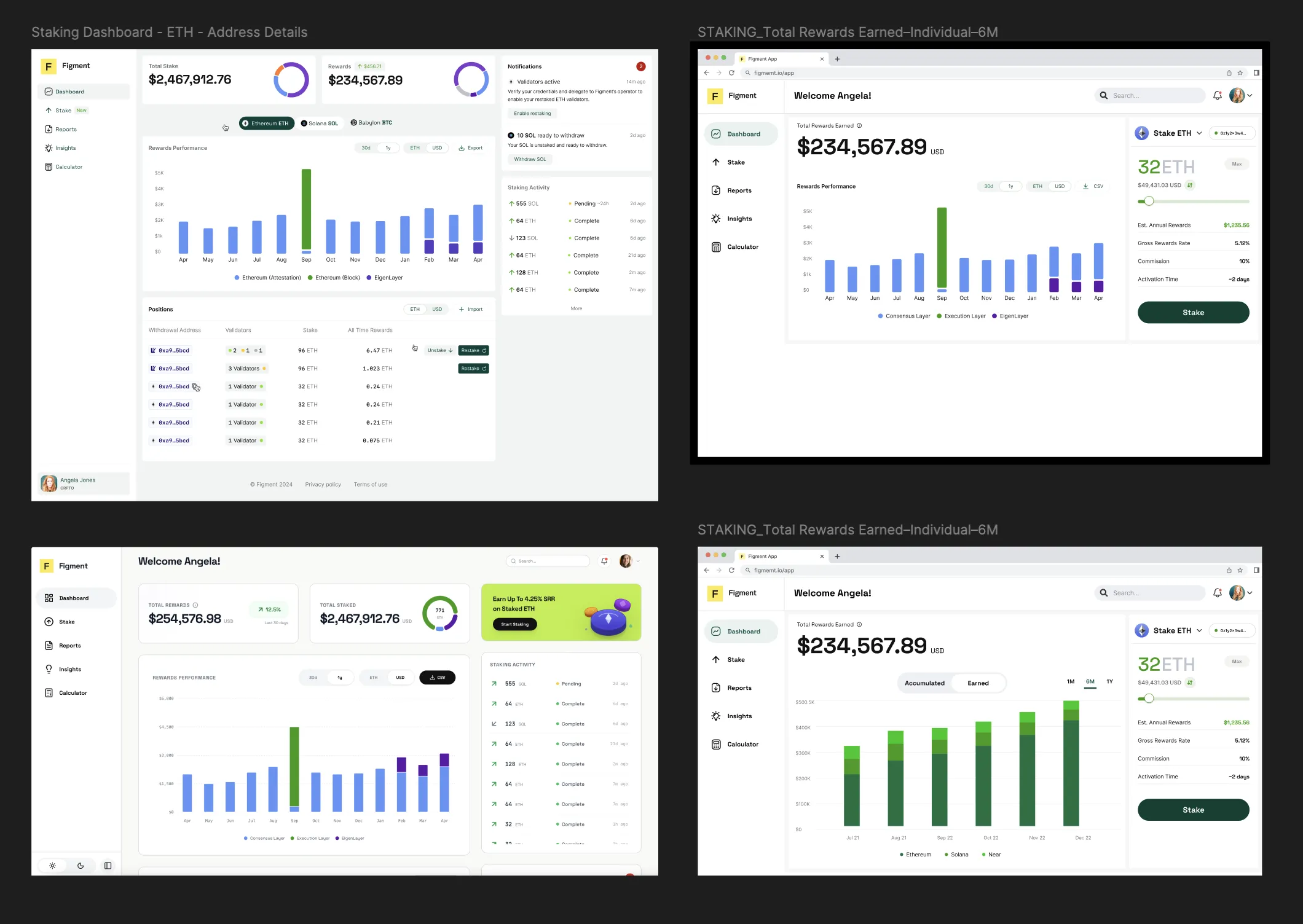
Early Exploration
Final Execution: Total Rewards, Total Staked. Staking Activity, and Rewards Performance chart—everything users needed to answer "how is my stake doing?" — on one screen, without navigation.
Results
Measurable improvement at every critical moment
Over 18 months, this redesign facilitated $135M in ETH rewards distributed across ~5% of the Ethereum network's validator set. Institutional clients who previously needed support to complete a stake were completing them independently. TVL grew alongside completion rate — because the product finally converted intent into executed transactions.
83%
Flow Completion Rate
~40%
Support Reduction
4.2/5
Confidence at Withdrawal
4 min
Avg time to complete staking flow
Mobile
Simplifying wallet connect
Dark mode
Learnings
Key takeaways from the work
Constraints don't require poor UX. The IMPORTANT warning was a wall — by adding context, hierarchy, and confirmation patterns, the redesign turned it into a checkpoint. Fewer steps isn't always better. Controlled friction beats no friction. And consolidation models the user's mental model — what belongs together.
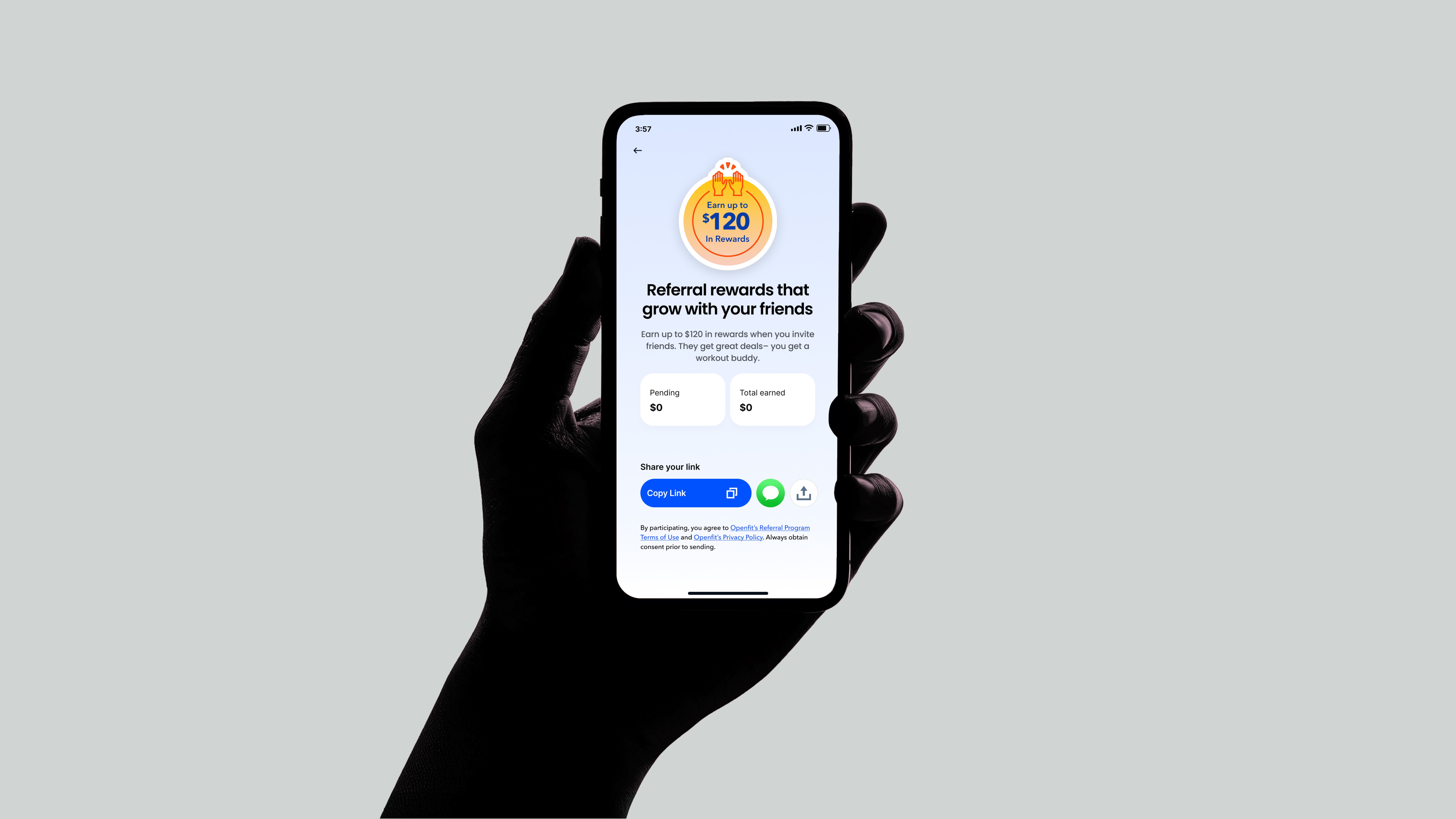
Referral Rewards
Redesigning Openfit's referral experience that unlocked a 4.6% increase in referred user growth.

Meal Scanner
Unlocking 33% Engagement Growth and 12% Free-to-Paid Conversion with AI-Powered Meal Scanning

Coming Soon: Ladder.sport
Maximize growth for a sports nutrition brand founded by LeBron James and Arnold Schwarzenegger.